
A well-maintained business profile can influence whether a local searcher calls, visits, requests directions, or keeps scrolling. It acts like a compact storefront in search results, so accuracy and usefulness matter more than clever wording. Optimization is not a one-time setup task. Hours change, services evolve, customers ask new questions, and fresh photos become available.
Establish the correct business identity
Use the real-world business name customers see on signage, documents, and the website. Avoid adding keywords, locations, or promotional phrases that are not part of that name. Enter the correct address if customers visit the location. Service-area businesses should configure their coverage honestly and avoid creating listings for virtual or nonexistent offices.
Confirm the phone number and website destination, then compare these details with prominent citations and the contact page. Consistency reduces confusion for both customers and search systems. If tracking numbers are used, configure them carefully so the primary business information remains clear.
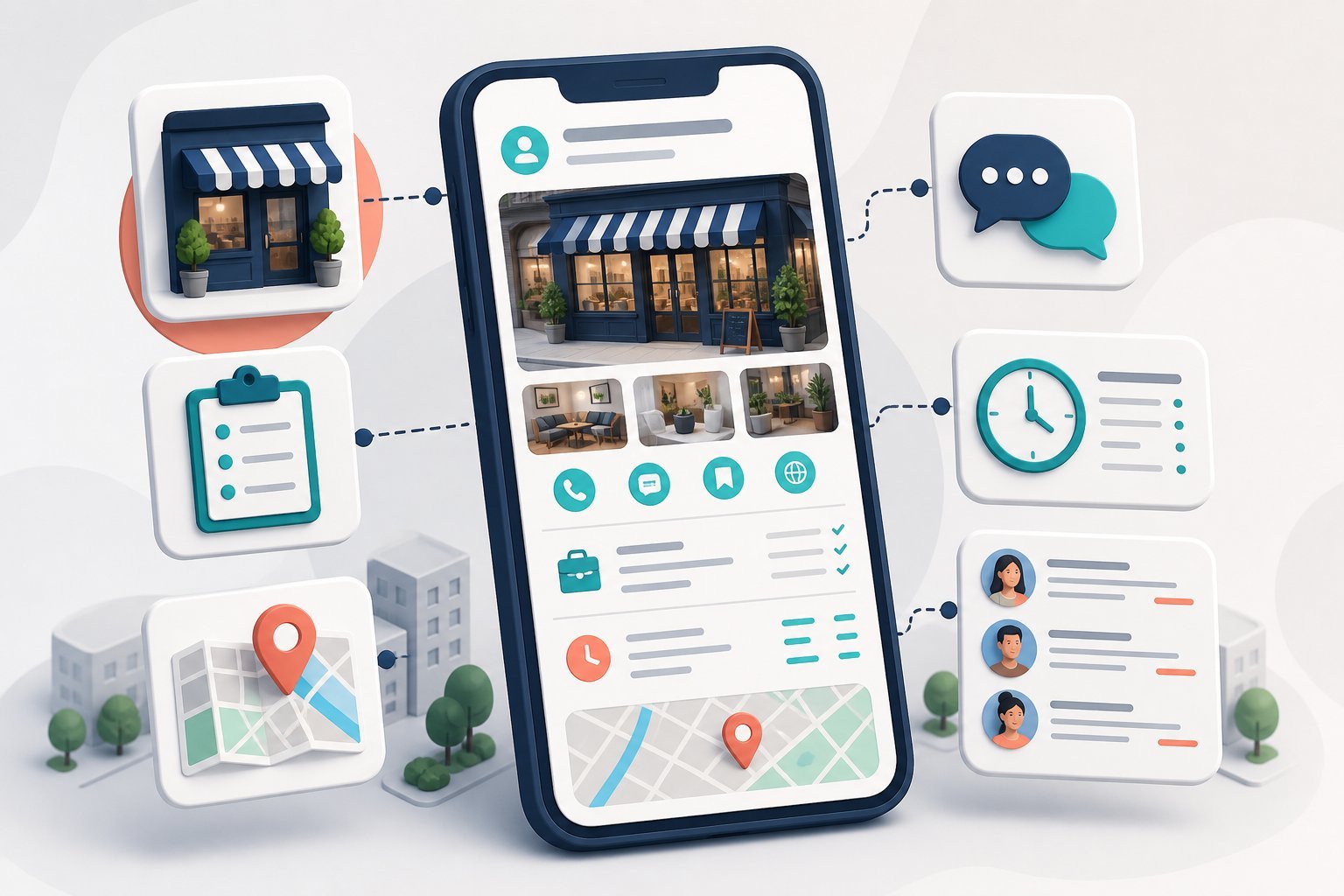
Choose categories with precision
The primary category should describe the core business as specifically as possible. Secondary categories can cover additional legitimate offerings, but more is not automatically better. Select only categories the business actually represents. Categories help determine when a listing is relevant, so a precise choice is stronger than a broad collection.
Complete the available service, product, menu, attribute, and appointment fields that fit the business. Use plain language and accurate details. These elements help a prospective customer understand what is offered without having to search through several pages.
Write for customers, not for repetition
The description should quickly explain what the business provides, who it serves, and what makes the experience useful or distinctive. Mention the main service area naturally where appropriate, but do not repeat lists of keywords or cities. Promotional claims, links, and excessive capitalization can make the profile look less trustworthy.
Publish authentic, helpful photos
Use clear, current images of the exterior, interior, team, work, products, or customer experience. An exterior photo can help visitors recognize the entrance. Interior images set expectations. Project or product photos demonstrate capability. Avoid relying only on highly polished graphics; authentic images often answer more practical questions.
Add new photos as the business changes and remove outdated visuals when possible. Use images the business owns or has permission to publish. Every visual should help a customer understand the location or offering.
Keep hours and updates reliable
Incorrect hours create immediate frustration. Maintain regular hours, special holiday hours, temporary closures, and seasonal schedules. Review contact details and links after a website redesign, move, or phone change. Posts and updates can highlight timely information, but they should supplement—not replace—accurate core fields.
Build a responsible review process
Invite real customers to share honest feedback after a completed purchase, visit, or service. Provide a simple review link and make the request neutral. Do not buy reviews, gate unhappy customers away from feedback, or offer incentives that violate platform rules.
Respond to reviews in a professional, privacy-conscious way. Thank positive reviewers without turning every response into an advertisement. For criticism, acknowledge the concern, avoid arguing publicly, and offer an appropriate path to continue the conversation.
Monitor performance and protect accuracy
Track calls, website clicks, direction requests, messages, bookings, and the search terms or pages that generate qualified leads where reporting is available. Check the profile for suggested edits, duplicate listings, unexpected category changes, and unanswered questions. Assign a responsible person to review it on a regular schedule.
Compare profile activity with real business records when possible. Call logs, booking data, lead-source notes, and in-store questions can reveal whether visibility is producing suitable customers. This context prevents decisions based only on a rising interaction count.
A strong business profile succeeds because it removes uncertainty. Accurate information, useful visuals, relevant categories, and thoughtful customer interactions make it easier for local searchers to choose with confidence.
Leave a Reply