
On-page SEO is the practice of making each webpage clear, useful, and easy to understand for both visitors and search engines. It covers the visible content, page structure, internal links, media, and search-facing elements such as the title tag. The objective is not to place a keyword in every possible location. It is to create the best page for a specific need and communicate that purpose consistently.
Match the page to search intent
Before editing, identify what the searcher is trying to accomplish. Someone looking for a definition expects an explanation. Someone comparing services needs criteria, proof, and options. Someone ready to buy or book wants clear details, trust signals, pricing or process information, and a direct next step.
Review the results currently appearing for the target query. Their formats can reveal whether users prefer guides, category pages, tools, videos, or local services. Use that evidence to shape the page while preserving original expertise and a distinctive point of view.
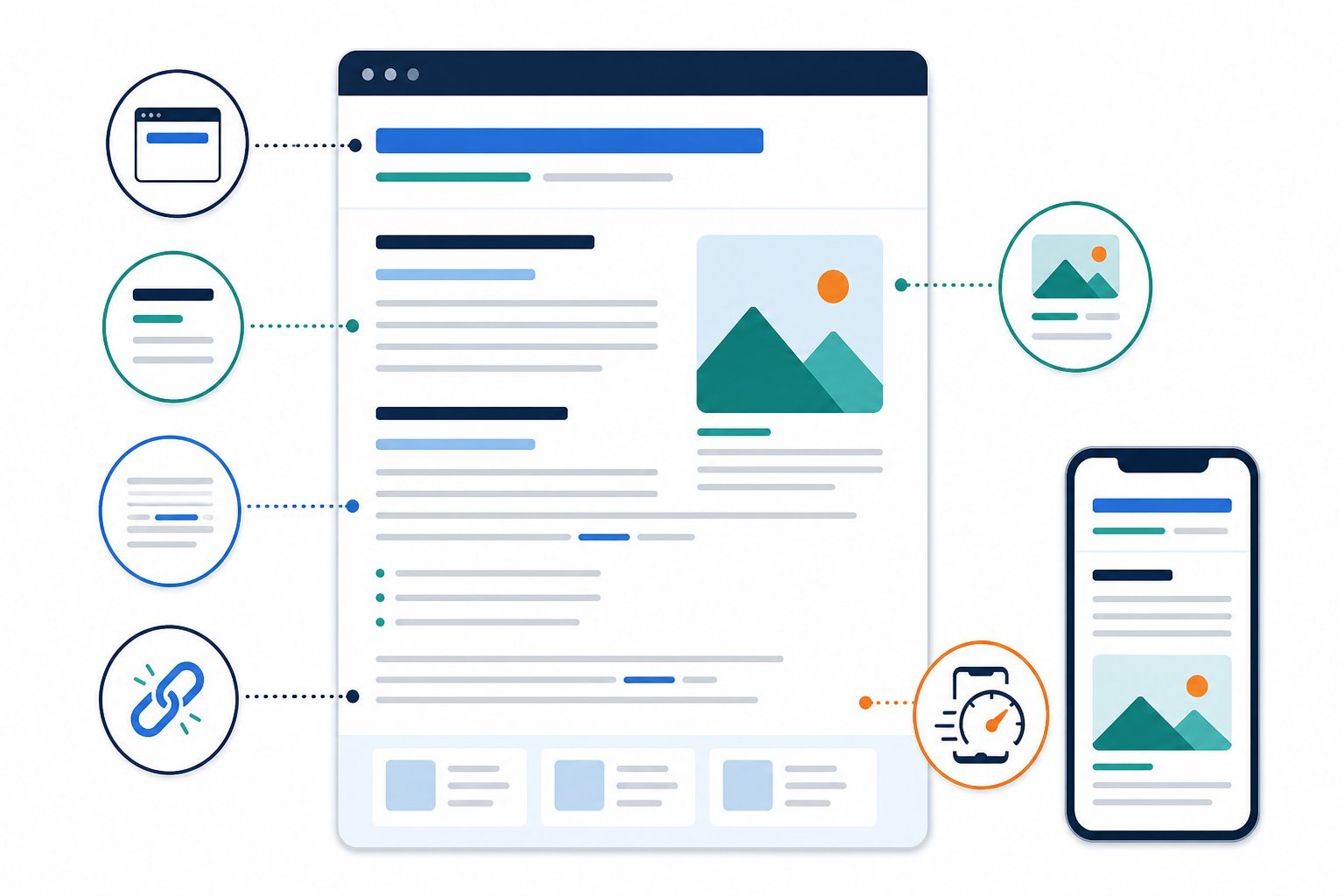
Create a focused title and heading structure
The title tag should describe the page accurately and give searchers a reason to choose it. Place the central topic naturally, but avoid awkward repetition. Keep each important page’s title distinct so several URLs do not compete with identical messaging.
Use one clear main heading for the visible page topic, followed by descriptive subheadings that organize the discussion. Headings help readers scan, but they should not be chosen only for their HTML level. Build a logical outline: major sections under second-level headings and supporting points under third-level headings when necessary.
Answer the topic with useful depth
There is no ideal word count for every page. Use enough detail to solve the reader’s problem without padding. Define important concepts, explain the process, address common objections, include examples, and support claims. Original experience, data, images, and practical steps can distinguish a page from generic summaries.
Write naturally around the main topic and its related questions. Exact-match repetition is unnecessary and can make copy uncomfortable to read. Search engines can understand connected concepts, while visitors value clarity.
Optimize media and page experience
Images should add information or make the page easier to understand. Compress them, choose sensible dimensions, and use descriptive filenames. Write alternative text that explains a meaningful image for people who cannot see it; do not use alt text as a place to repeat keywords. Decorative images can use empty alternative text when appropriate.
Test the page on a phone. Check loading speed, visual stability, font size, tap targets, forms, and intrusive overlays. A clean experience supports both usability and organic performance.
Use internal links strategically
Link to helpful supporting pages where a reader would naturally want more detail. Use descriptive anchor text and avoid forcing the same phrase across many links. Important pages should receive links from relevant, established content and should not be buried several layers deep.
Internal links also create topic relationships. A central service page can connect to case studies, frequently asked questions, and detailed guides, while those resources point back to the service in context.
Review the search snippet and conversion path
A concise meta description can summarize the benefit of the page and encourage an appropriate click, although search engines may show a different excerpt. Once visitors arrive, the page should provide a clear next action—contact, buy, subscribe, compare, or continue reading.
Improve after publication
Monitor impressions, clicks, queries, engagement, conversions, and competing pages. Refresh outdated information, strengthen weak sections, repair links, and consolidate overlap. On-page SEO is most effective as an ongoing editorial discipline: understand the need, publish a strong answer, measure the result, and improve it with evidence.
Leave a Reply