
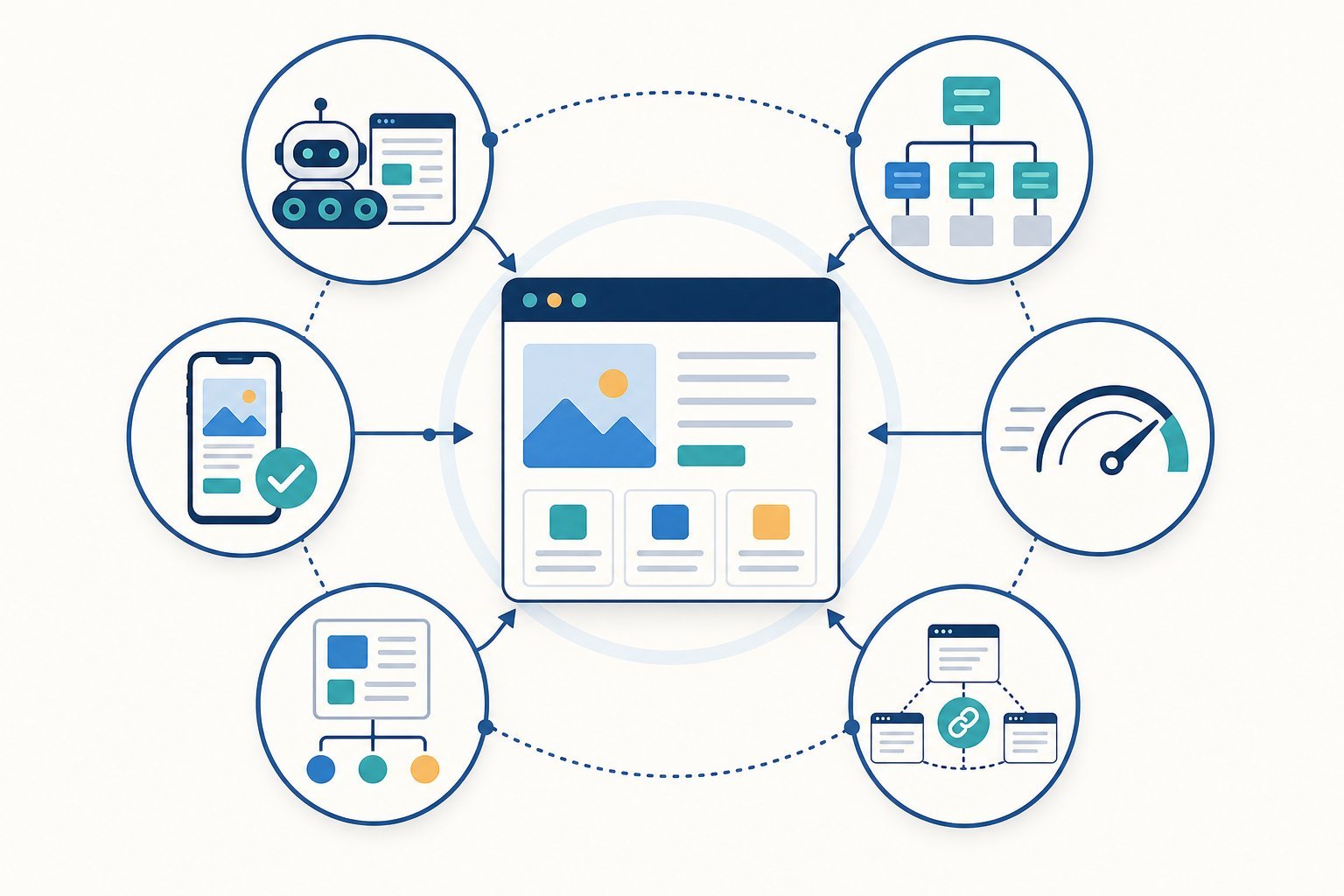
Strong content can underperform when the website beneath it sends confusing signals. Technical SEO establishes whether search engines can access, render, interpret, and index a page. On-page SEO establishes what the page is about and how well it serves the visitor. Treating them as separate projects creates gaps; the strongest results come when the foundation and the content are improved together.
Make important pages discoverable
Search engines generally find pages through links and sitemaps. Important content should be reachable through a logical navigation path, linked from relevant pages, and included in an accurate XML sitemap. Orphan pages—URLs with no internal links—are difficult for visitors and crawlers to discover and rarely receive strong internal authority.
Review robots directives, noindex tags, canonical tags, and authentication requirements. These controls can be useful, but a single incorrect rule may hide valuable pages. Check the rendered result rather than only the template code, especially when JavaScript creates essential content or links.
Resolve duplicate and competing URLs
Filters, tracking parameters, print views, protocol variants, and inconsistent trailing slashes can create several URLs for substantially the same content. Ecommerce and publishing platforms are especially vulnerable. Use redirects and canonical signals consistently, and link internally to the preferred version.
Duplication can also be editorial. Two guides may target the same need with slightly different wording. Decide whether each page serves a distinct intent. If not, consolidate the strongest information into one resource and redirect the weaker URL when appropriate.
Connect page performance to user experience
A fast page helps visitors begin reading and acting without frustration. Optimize image dimensions and compression, remove unnecessary scripts, improve caching, and reduce layout shifts. Test representative templates on mobile devices and realistic connections. A fast home page does not compensate for a slow service or checkout page.
Performance work should preserve content and functionality. Removing a helpful image or form to improve a score may harm the business outcome. Prioritize changes that improve both experience and efficiency.
Clarify meaning on every page
Once access and performance are reliable, refine the title tag, main heading, subheadings, body copy, media, and internal links. Match the format to search intent and answer the topic with enough original detail. Use structured data only when it accurately represents visible content and follows the relevant requirements; markup cannot replace a useful page.
Technical and editorial teams should agree on which elements are editable. A content specialist needs control over titles and headings, while developers need safe templates that prevent accidental duplicates, empty tags, and broken canonical URLs.
Strengthen architecture with internal links
A clear hierarchy helps users understand how topics relate. Group detailed articles under relevant services or categories, link supporting resources to their central page, and provide contextual pathways between related needs. Use descriptive anchors and avoid relying on links hidden inside scripts or inaccessible components.
Monitor changes after deployment
Before releasing a redesign or migration, crawl a staging version where possible, map redirects, protect metadata, and benchmark key templates. After launch, monitor response codes, indexing, canonical selection, structured data, page performance, rankings, and conversions. Small technical errors can spread across thousands of URLs when they originate in a shared template.
Create one shared backlog
Combine technical and on-page findings in a single prioritized roadmap. Rank actions by business impact, affected traffic, effort, and dependencies. A blocked page, weak content, and poor mobile form can all limit the same conversion path. When teams solve the entire path rather than isolated scores, organic visibility rests on a foundation that can support continued growth.
Assign an owner and validation step to every item. A developer may deploy a template fix, but an SEO specialist should confirm the rendered tags and a content owner should review the visible result. Shared acceptance criteria reduce the chance that a technically correct change creates a confusing page—or that a strong rewrite is published with broken signals.
Leave a Reply