
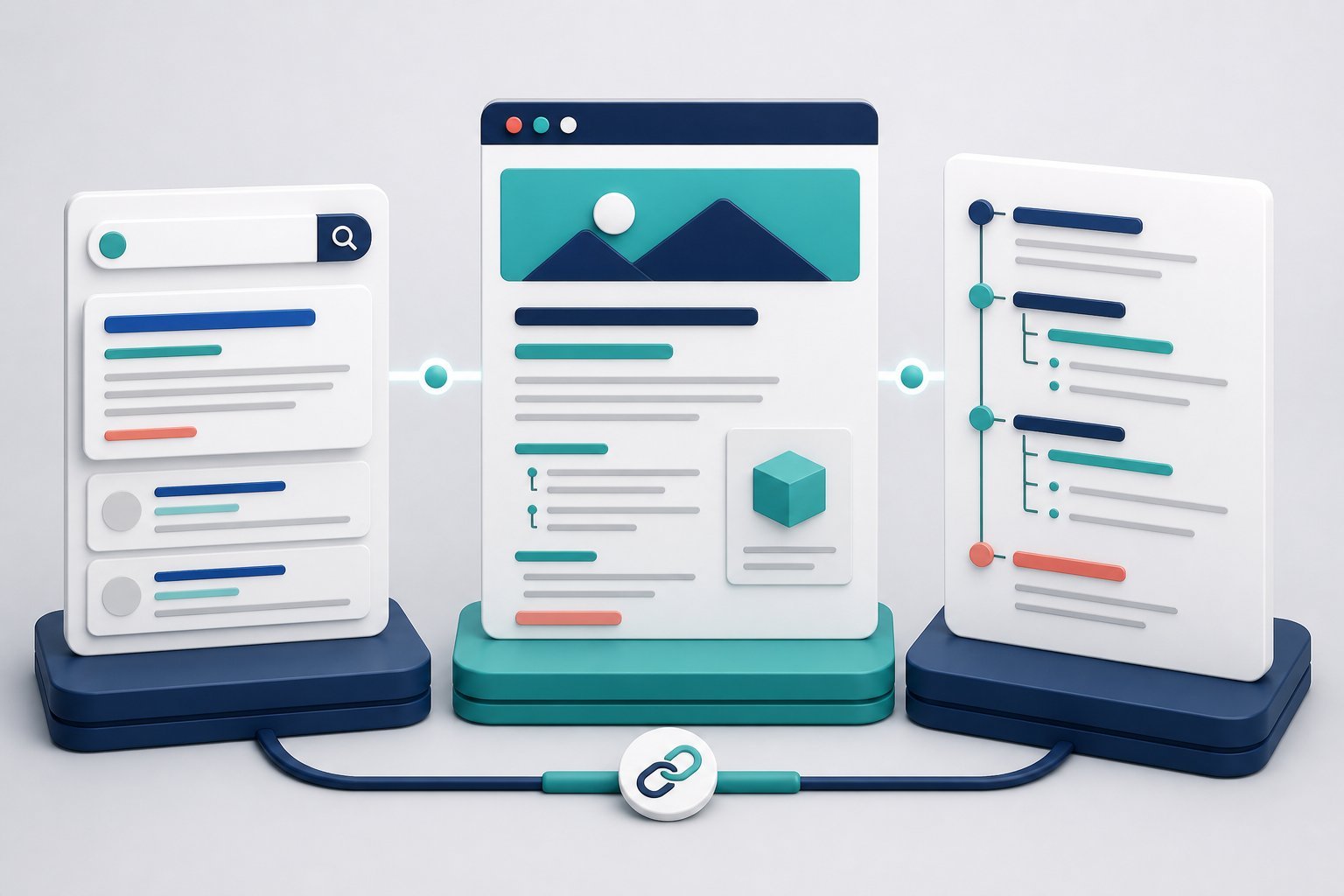
Title tags, meta descriptions, and headings perform different jobs, but they work best when they tell one consistent story. The title tag introduces a page in search results and browser tabs. The meta description can encourage the right person to click. Headings organize the content after arrival. Optimizing them means improving clarity and relevance—not filling each field with repeated keywords.
Write title tags around purpose and value
Start by defining the page’s primary topic and search intent. A service page title should make the offering clear. A guide can promise a useful outcome or indicate its scope. A product category may combine the product type with a meaningful differentiator. Include the brand when it helps recognition, often near the end, but keep the page-specific message prominent.
Search results have limited visual space, and exact display length varies by device and characters. Put the most important information early and remove filler. Each significant page needs a distinct title. Duplicates make it harder for searchers and search engines to understand which URL best answers a query.
Create meta descriptions that qualify the click
A meta description is not a direct promise that the written text will always appear; search engines may generate a different excerpt based on the query. It is still worth writing a strong summary for important pages. Explain what the visitor will find, include a relevant benefit or detail, and use a natural call to action when appropriate.
Avoid vague phrases such as “welcome to our website” and unsupported superlatives. Be specific. A description for a local service might mention the work, service area, and an important trust factor. A guide might identify the audience and the practical steps covered. Accuracy helps attract visitors who are more likely to engage.
Use one clear main heading
The main heading should confirm that the visitor reached the expected page. It can resemble the title tag, but it does not have to match it word for word. Search titles often need compact phrasing, while an on-page heading can be more conversational.
Most pages benefit from one obvious main heading. This is primarily about clarity rather than a fear of technical penalties. Logos, templates, and complex components sometimes create additional first-level headings, so review the rendered page and keep the visible hierarchy understandable.
Build a logical subheading outline
Second-level headings should introduce the major sections required to answer the topic. Third-level headings can divide a complex section into supporting points. Do not skip levels merely to achieve a visual style; use CSS for appearance and heading levels for structure.
Descriptive headings help readers decide where to focus. “Choose a primary category” communicates more than “Step two.” Questions can work well when they match genuine concerns, but not every heading needs to be phrased as a query.
Avoid common optimization mistakes
- Repeating the same exact keyword several times in the title and headings.
- Using identical metadata across many pages.
- Writing clickbait that the page does not fulfill.
- Turning every sentence into a heading and destroying the reading flow.
- Ignoring the page that already ranks and creating a competing duplicate.
Test performance in context
Review search queries, impressions, click-through rate, and average position together. A low click-through rate may point to weak messaging, but it can also reflect the type of result, strong advertisements, or a query that receives an instant answer. Compare similar pages and time periods rather than relying on one percentage.
When updating titles, descriptions, or headings, document the change and allow enough time to observe a pattern. The best optimization accurately sets an expectation in search, confirms it on the page, and guides the visitor toward useful content.
Leave a Reply